The Road to 100: How a Weakening Rupee Could Challenge India’s Economic Dreams
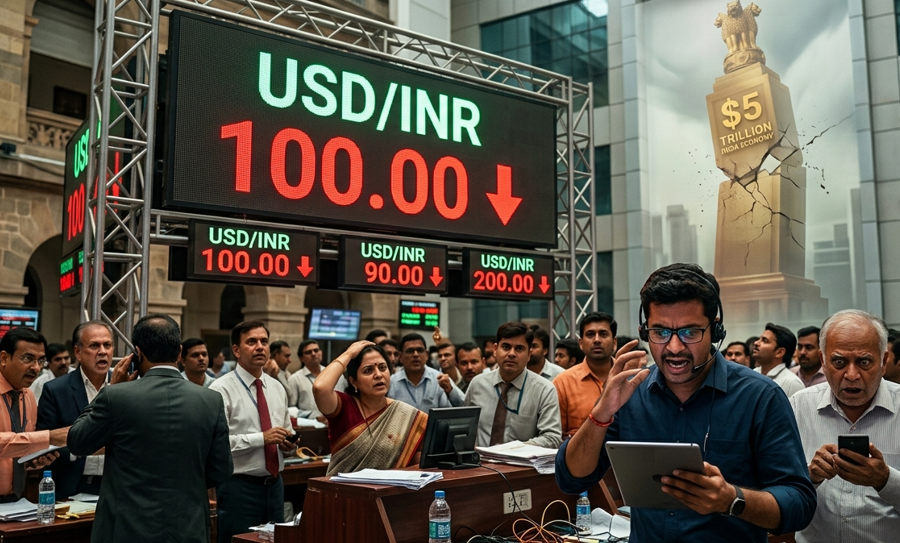
NEW DELHI: As the Indian Rupee inches closer to the psychological mark of 100 against the US Dollar, economists and policymakers are raising red flags over the potential fallout on the nation’s ambitious growth targets. While a depreciating currency is often seen as a boon for exporters, the current trajectory suggests that the costs of a weak rupee might far outweigh the benefits for an import-dependent economy like India. The surge toward the triple-digit mark is being viewed as a “harsh reality check” for India’s aspirations to become a global manufacturing and economic powerhouse.
The primary concern lies in the “imported inflation” that accompanies a falling rupee. India imports a vast majority of its crude oil, electronic components, and edible oils. When the rupee weakens, the cost of these essential commodities spikes, leading to a cascading effect on the prices of fuel, logistics, and daily consumer goods. This inflationary pressure not only pinches the pocket of the common man but also forces the Reserve Bank of India (RBI) to maintain higher interest rates for longer periods. High-interest rates, in turn, dampen private investment and slow down the pace of industrial expansion, creating a hurdle for the government’s ‘Make in India’ initiative.
Furthermore, Indian corporations with significant external commercial borrowings (ECBs) face a daunting challenge. As the dollar strengthens, the cost of servicing foreign debt increases substantially, putting immense strain on corporate balance sheets. This financial stress can lead to a reduction in capital expenditure, further stalling economic momentum. While the RBI has been actively using its foreign exchange reserves to manage extreme volatility, the global macroeconomic environment—characterized by geopolitical tensions and shifting trade alliances—continues to exert downward pressure. To achieve its goal of a $5 trillion economy, India must find a way to stabilize its currency and reduce its reliance on dollar-denominated imports through structural reforms and energy independence.
Related News


Follow us for Latest Updates
