Are Mormons Christian? Pentagon’s Administrative Tweak Reignites a Centuries-Old Theological Debate
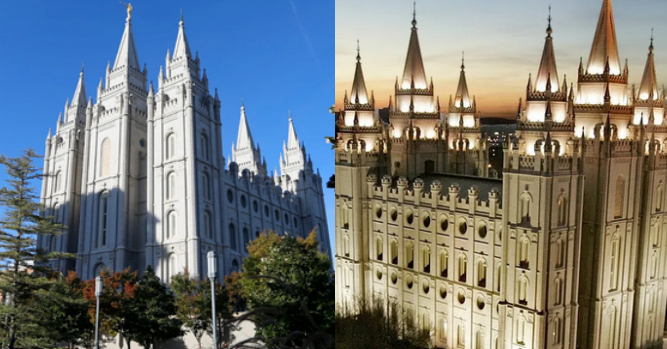
Washington, D.C.: When the U.S. Department of Defense recently decided to streamline its internal list of recognized religions, it inadvertently stepped into a complex theological minefield. The administrative effort to restructure how faiths are categorized for military personnel has brought a 200-year-old question back to the forefront of national discourse: Is The Church of Jesus Christ of Latter-day Saints (commonly known as the Mormon church) truly a Christian denomination?
While millions of Latter-day Saints firmly identify as Christians, many mainstream Christian scholars and clergy fundamentally disagree. Now, this enduring theological rift has collided with military administration and political maneuvering.
The Pentagon’s Move and the Political Backlash
The controversy began when the Pentagon attempted to pare down its extensive list of over 200 recognized religious affiliations—removing categories like Wiccans, atheists, and pagans—to help military chaplains organize resources more efficiently. During this overhaul, the LDS church was not categorized under the “Christian” umbrella.
This exclusion sparked immediate outrage from prominent Latter-day Saint politicians. Utah’s Republican U.S. Senators, Mike Lee and John Curtis, fiercely defended their faith’s Christian identity. Taking to social media platform X, Senator Curtis argued that it is “unacceptable” for the government to redefine a religion against its own self-identification, pointing out that the name of Jesus Christ is literally in the church’s title. Senator Lee echoed this sentiment, stating that his faith is inextricably tied to Christianity, “regardless of what the Pentagon thinks.”
Faced with mounting pressure, the Pentagon opted for a diplomatic retreat on Monday. Rather than adding the LDS church to the Christian list, the Defense Department removed the “Christian” label from 20 other major traditions, including Catholics, Lutherans, and Pentecostals. The Pentagon clarified that its internal rubrics are purely for logistical efficiency and make no claims regarding the theological legitimacy of any faith.
The Root of the Divide: Different Views on the Divine
The Church of Jesus Christ of Latter-day Saints boasts nearly 18 million members globally. Its official doctrine explicitly states that it is a Christian church—a restoration of Jesus’s original teachings—and that salvation comes only through faith in Christ.
So why the debate? According to Matthew Bowman, chair of Mormon studies at Claremont Graduate University, the wedge lies in fundamentally different definitions of God and the Holy Trinity.
Mainstream Christian denominations widely accept the Nicene Creed, which defines the Father, Son, and Holy Spirit as one unified divine being. Latter-day Saints reject this creed. They believe the three figures are entirely distinct entities. Furthermore, traditional Christianity views God as an infinite spirit, whereas early LDS founders taught that God was once a human being who eventually achieved Godhood. Because of these stark differences, major institutions like the Catholic Church have historically ruled that LDS baptisms do not align with traditional Christian rites.
A History of Suspicion in Politics and the Military
This theological friction often bleeds into the public square. Politically, Latter-day Saints and evangelical Christians frequently align on conservative social issues, yet a deep-seated religious suspicion remains. This dynamic was highly visible during Mitt Romney’s 2012 presidential campaign and continues today, as some vocal evangelical factions increasingly label Mormonism as heretical.
This skepticism has also been felt within the ranks of the military. Philip McLemore, who served as an Air Force LDS chaplain for over two decades, recalled facing career discrimination from fellow Christian chaplains who did not view him as a “true” Christian and suspected him of using the military to proselytize.
However, McLemore noted that the theological debates rarely matter to the troops on the ground. “Service members would not know what your denomination was, and they didn’t care,” he explained, adding that soldiers primarily seek out chaplains for practical support regarding mental health, marital issues, and work-related stress.
Related News

Follow us for Latest Updates
