Transforming Swachh Bharat Mission (Urban) 2.0 into a Mass Movement: Chief Secretary Directs Regular Reviews of Waste-to-Energy Projects in Rajasthan
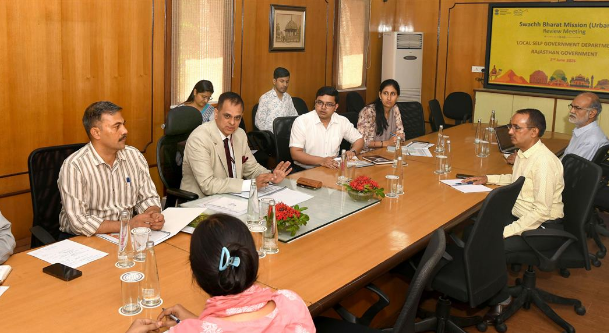
Jaipur, June 2, 2026:
The Government of Rajasthan is systematically accelerating its efforts to transform its cities into clean, modern, and scientifically managed urban models. In a high-level review meeting held at the Secretariat on Tuesday, Chief Secretary Shri V. Srinivas evaluated the progress of the Swachh Bharat Mission (Urban) 2.0.
The Chief Secretary emphasized that no cleanliness campaign can achieve absolute success without deep-rooted public participation. He directed officials to transition the mission from an administrative initiative into a full-scale ‘Janandolan’ (mass movement). While noting that the mission is progressing systematically with a vast geographic reach, he stressed the urgent need to further strengthen community engagement at the grassroots level.
Strengthening Sustainable Sanitation and Modern Infrastructure
During the review, the Chief Secretary highlighted that SBM (Urban) 2.0 focuses heavily on sustainable sanitation, solid waste management, used water management, capacity building, and public awareness. The state is reinforcing its urban waste ecosystem through several key structural components:
- Material Recovery Facilities (MRF): Streamlining the segregation and recycling of dry waste.
- Solid Waste Processing Plants: Ensuring the scientific disposal of municipal solid waste.
- Sewage Treatment Plants (STP): Maximizing the treatment and reuse of wastewater.
- Bio-Remediation: Using biological mechanisms to safely clear legacy waste without harming the local environment.
To complement this infrastructure, urban local bodies are actively conducting door-to-door awareness campaigns, street plays (Nukkad Nataks), technical workshops, and targeted training programs to foster civic responsibility.
Focus on Waste-to-Energy and Technical Uniformity
Looking ahead to the upcoming Swachh Survekshan (Cleanliness Survey), the Chief Secretary directed officials to maintain strict vigilance and preparation. He ordered regular performance reviews of the 1000 TPD (Tons Per Day) capacity Waste-to-Energy plant currently operating in Jaipur to maximize its operational output.
Furthermore, he insisted on maintaining technical uniformity across all solid waste management plants in the state. To achieve this, he directed urban local bodies to actively share their innovations, technical expertise, and best practices. Organizing regular state-level workshops and cross-learning sessions was marked as a mandatory requirement to standardize waste management technologies.
By the Numbers: SBM (Urban) 2.0 Progress in Rajasthan
Shri Ravi Jain, Secretary of the Local Self Government (LSG) Department, presented a comprehensive financial and physical progress report during the briefing:
| Key Performance Indicators | Current Status and Metrics |
| Total Approved Project Budget | ₹4,804.94 Crore |
| Operational Solid Waste Plants | 27 Plants (with several more under construction/tendering) |
| Scientifically Processed Legacy Waste | 97.43 Lakh Cubic Meters |
| Reclaimed Urban Land | Approx. 729.79 Acres (Freed from old dumping yards) |
Secretary Ravi Jain added that following the successful model established in Jaipur, work on a similar Waste-to-Energy project in Jodhpur is progressing rapidly. The meeting also evaluated ongoing campaigns, including the Single-Use Plastic-Free Rajasthan initiative, the monitoring of door-to-door garbage collection, and community-driven events like the ‘Safai Seva Marathon’.
Accelerating AMRUT 2.0 Infrastructure
Reviewing the broader urban development landscape, Chief Secretary Shri V. Srinivas ordered departments to expedite all projects under AMRUT 2.0. He reiterated that solid waste management and clean water infrastructure have a direct, undeniable impact on public health and the overall quality of life for citizens. Local bodies must remain proactive, developing self-sustaining sanitation models tailored to their municipal dynamics.
The review meeting saw active participation from senior officials, including LSG Director Shri Juikar Pratik Chandrashekhar, SBM (Urban) Chief Engineer Shri Arun Vyas, along with superintendents, executive engineers, and departmental representatives.
Disclaimer:
This news report is prepared for public informational purposes based on the official statistics and press briefs released during the inter-departmental review meeting chaired by the Chief Secretary, Government of Rajasthan. For authentic updates regarding municipal tenders, statutory waste management guidelines, or financial allocations, readers are advised to refer to the official portal of the Local Self Government Department, Government of Rajasthan.
Related News
Follow us for Latest Updates
