Jaipur Discom’s New Pilot Project: Free Smart IoT Devices for 2,000 ACs to Slash Electricity Bills
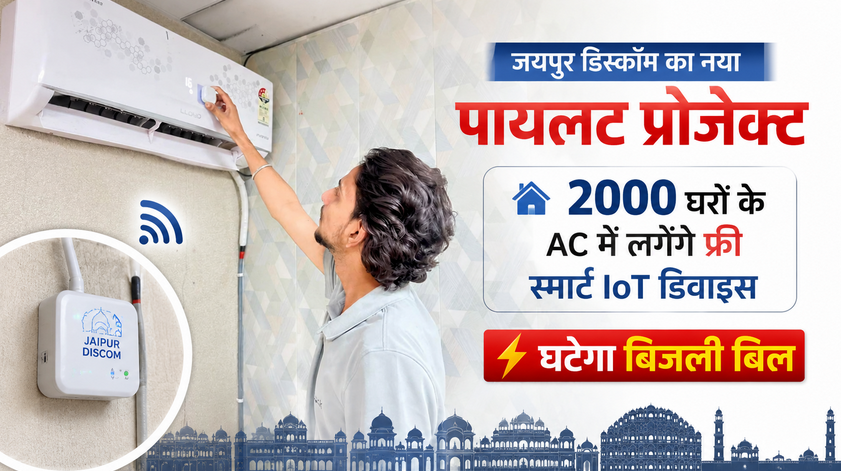
In an innovative step towards energy conservation and grid security, the Jaipur Vidyut Vitran Nigam Limited (Jaipur Discom) has launched a unique pilot project in Rajasthan’s capital. In collaboration with technology firm Flock Energy, the discom has started installing smart IoT (Internet of Things) devices on the air conditioners (ACs) of domestic electricity consumers entirely free of cost.
In its initial phase, this pilot project is being rolled out across the Vaishali Nagar, Mansarovar, and Malviya Nagar areas of Jaipur. Approximately 2,000 household consumers are currently being equipped with these specialized devices. The core objective of this initiative is to dynamically manage and balance electricity consumption during peak demand hours.
This marks the first time an electricity distribution company in India has implemented an Automated Demand Response (ADR) system to regulate domestic power consumption. The pilot project has been initiated under the Demand Flexibility and Demand Side Management Regulations-2026 framed by the Rajasthan Electricity Regulatory Commission (RERC).
India’s First ADR Tech-Based Project
This project stands out as a pioneering initiative in the country’s power sector, where automated demand response technology is being deployed at the household level. By utilizing this technology, high-power-consuming domestic appliances—specifically air conditioners—can be automatically regulated during peak hours. This will significantly alleviate sudden pressure on the power grid while simultaneously lowering electricity expenses for consumers.
How Does the Smart IoT Device Work?
The advanced ADR system consists of two primary components. The first is a smart plug unit that is inserted into a standard power socket at home. The second unit is attached directly to the air conditioner. This combined setup connects to the discom’s central grid management system via the consumer’s home Wi-Fi network.
Whenever power demand on the grid peaks to critical levels, the smart sensor activates. Without compromising the comfort level of the room, the device automatically raises the AC temperature setting by 1 degree Celsius. Technical assessments indicate that if an AC runs for 6 to 8 hours daily, this minor automated adjustment can reduce its power consumption by 3 to 6 percent.
Up to 1 MW Power Load Reduction Expected
According to the Discom management, integrating the AC usage of these 2,000 consumers with ADR technology is expected to shave off nearly 1 megawatt (MW) of peak demand from the city’s power grid. This collective shift will translate into an average electricity bill savings of about 6 percent for individual consumers. Additionally, it will effectively protect the regional power grid from overloading.
Conclusion: Jaipur Discom’s smart grid initiative is a forward-looking step that will reduce local power faults and substation tripping by curbing excessive peak-hour loads. Ultimately, this ensures a more reliable, uninterrupted power supply with stable voltage for residents, paving the way for smarter urban energy management.
Related News


Follow us for Latest Updates
