AAP MP Defections to BJP Spark Debate: Dharmendra Kumar Jatav Raises Questions on Social Justice and Representation
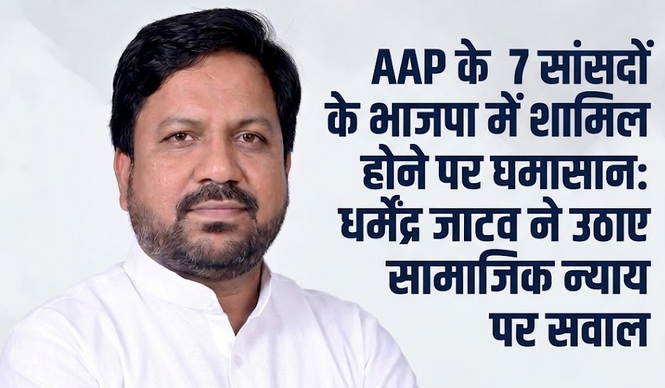
The political landscape in India has once again stirred debate after seven Rajya Sabha MPs from Aam Aadmi Party (AAP) reportedly joined the Bharatiya Janata Party (BJP). The development has triggered sharp reactions, particularly from Congress leaders, who have linked the issue to questions of social justice and representation.
Reacting to the situation, Dharmendra Kumar Jatav, National Coordinator of the AICC SC Department and Incharge of Spokespersons, raised concerns over what he described as a pattern influenced by social hierarchy. According to him, if a Dalit leader were to take such a step, they would likely face strong criticism and even rejection from their own community. However, he argued that leaders from upper-caste backgrounds often do not encounter similar resistance when shifting towards the BJP, as their social base is traditionally aligned with the party.
Jatav also criticized Arvind Kejriwal for his choices in nominating members to the Rajya Sabha. He pointed out that all ten MPs sent by AAP belonged to upper-caste groups, despite the party drawing significant electoral support from SC, ST, OBC, and minority communities. He suggested that this imbalance reflected a disregard for social justice and equitable representation, which may have contributed to the party’s current political challenges.
Referring to earlier political developments, Jatav noted that many individuals who were seen alongside Kejriwal during the early days at Ramlila Maidan had eventually moved towards the BJP after electoral setbacks faced by the Congress. He claimed that this trend has continued over time, indicating a deeper connection between an individual’s social location and their political decisions.
The episode has reignited a broader discussion about caste dynamics, representation, and ideological consistency in Indian politics. As party loyalties continue to shift, the debate highlights how social structures still play a significant role in shaping political trajectories and public perception.
Related News

Follow us for Latest Updates
