Qantas to Launch World’s Longest Non-Stop Flight Connecting Sydney and London by October 2027
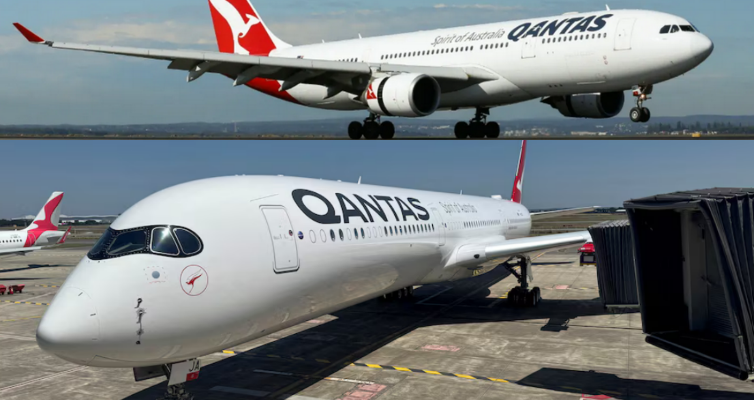
TOULOUSE (France): Australian carrier Qantas Airways is preparing to make aviation history by setting a definitive timeline for the world’s longest non-stop commercial flight. As a major milestone for its ambitious “Project Sunrise,” the airline announced that direct flights connecting Sydney and London will officially take to the skies in October 2027. This groundbreaking service will allow passengers to cover the massive intercontinental distance in approximately 20 to 22 hours, eliminating the need for layovers and saving up to four hours of total travel time. Tickets for the highly anticipated route will be available for purchase starting in February 2027.
To make this ultra-long-haul journey a reality, Qantas recently showcased the first of 12 specially modified Airbus A350-1000ULR (Ultra Long Range) aircraft during a ceremony at the Airbus headquarters in Toulouse, France, on June 17, 2026. Engineered for extreme endurance, the cutting-edge jet features an additional 20,000-liter fuel tank, enabling it to fly continuously for over 16,000 kilometers (nearly 10,000 miles).
Recognizing the immense physical and mental toll of crossing up to 16 time zones in a single sitting, the airline has spent nearly a decade heavily researching the biological impact of such flights. From strategically timed meal services to specialized cabin lighting, Qantas is integrating modern health sciences to mitigate jet lag, ensuring passengers arrive at their destination feeling as refreshed as possible.
The Science of Sleep and a Dedicated ‘Wellness Zone’
Professor Peter Cistulli, a sleep medicine expert at the University of Sydney who collaborated on the research, highlighted that crossing numerous time zones presents a massive biological challenge. To counter this, cabin designer David Caon approached the aircraft’s interior not just as an aesthetic project, but as a scientific endeavor. The resulting design features a unique “wellness zone” bathed in diffused, shimmering light intended to recreate the relaxing ambiance of lounging by a swimming pool, encouraging passengers to stretch and move around.
Additionally, the entire cabin utilizes customized mood lighting programmed with 14 distinct scenarios inspired by the natural landscapes of Australia to simulate sunrises and sunsets. Researchers also optimized meal schedules—such as deliberately delaying food service immediately after takeoff—to establish a “protective sleep window.” Scientific testing demonstrated that these deliberate environmental cues help align the body’s internal clock, keeping passengers significantly more alert upon arrival compared to traditional flight services.
Premium Cabin Layout and Passenger Comfort
Operating a 22-hour flight requires strict weight and fuel management. Consequently, the A350-1000ULR has been designed with a premium-heavy configuration, capping the passenger capacity at just 238 people spread across four classes. In certain weather conditions, the airline may even need to block seats to conserve fuel. The front of the aircraft will feature fully enclosed first-class suites equipped with fixed beds, setting a new standard for airborne luxury.
For passengers flying economy, the standard seat pitch (distance between seats) will be 33 inches, with some rows slightly tighter at 32 inches—details that will be transparent during the booking process. Meanwhile, a dedicated “Economy Plus” section will offer an upgraded 34 inches of legroom. Qantas CEO Vanessa Hudson anticipates charging a roughly 20% premium over standard one-stop flights for this direct service.
While some business travelers question the cost-to-time-saved ratio, many frequent flyers welcome the initiative. Paris-based Sam Davies and London-based Nathalie Curtis both noted that bypassing tedious airport security checks, avoiding layovers, and reducing jet lag would easily justify the premium fare, provided the cabin remains comfortable and hygienic for the duration of the flight.
Conclusion: Qantas’s Project Sunrise represents a monumental leap in global connectivity and commercial aviation engineering. It completely transforms the historic “Kangaroo Route”—which in 1947 required a grueling seven stops to reach London from Sydney—into a seamless, single-leg journey. By blending advanced aeronautics with the science of human wellness, Qantas is hoping to redefine long-haul travel. Once the Sydney-London route is established, the airline plans to expand the initiative by launching non-stop flights between Sydney and New York.
Related News



Follow us for Latest Updates
