Monsoon Health Alert in Rajasthan: Health Minister Orders Strict Measures Against Seasonal Diseases and Mandatory Hospital Audits
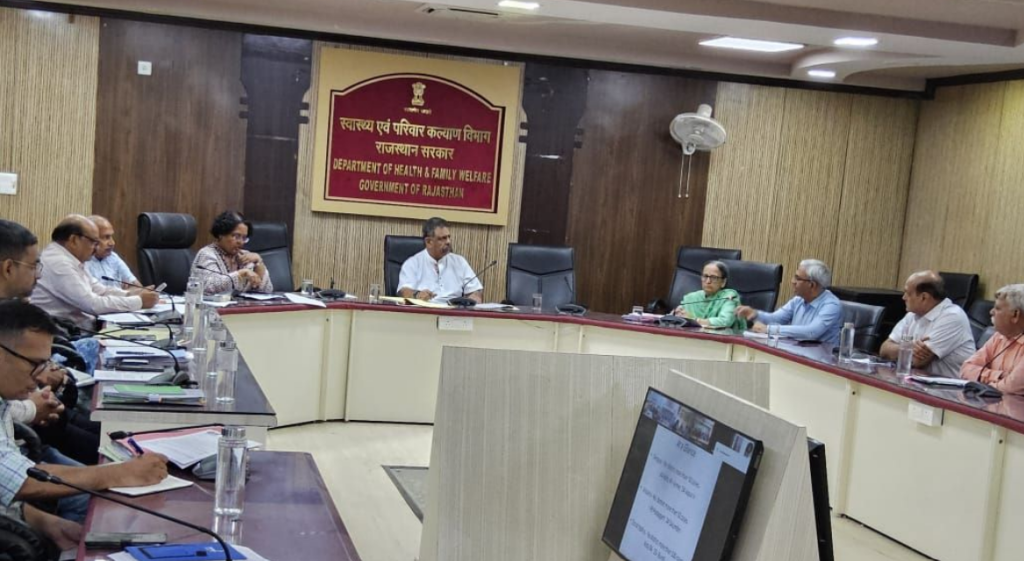
Jaipur. With the onset of the monsoon season, the Rajasthan Medical and Health Department has shifted into high alert to combat the potential rise of waterborne and vector-borne illnesses. To review the state’s preparedness, Medical and Health Minister Mr. Gajendra Singh Khinvsar chaired a high-level evaluation meeting at Swasthya Bhawan on Tuesday, June 23.
The comprehensive meeting focused on the prevention, control, and treatment strategies for seasonal spikes in dengue, malaria, scrub typhus, viral fevers, and other waterborne infections. Additionally, the minister reviewed the current status of fire and electrical safety audits across all government healthcare facilities to ensure a secure environment for patients and medical staff.
Minister Khinvsar strictly directed administrative and medical officers to ensure that there is no compromise in delivering timely and high-quality healthcare services to the public. He emphasized that the state government is fully committed to safeguarding public health throughout the monsoon period and expects seamless inter-departmental coordination.
Ensuring Adequate Stock of Medicines and Equipment
The Health Minister instructed all state-run hospitals to maintain a surplus stock of essential medicines, diagnostic kits, beds, medical oxygen, and critical life-saving equipment. He ordered that adequate medical personnel must be available 24/7 across all shifts.
To manage emergencies effectively, the administration has been directed to strengthen the rapid response mechanism and ensure that district-level control rooms operate at maximum efficiency to track localized outbreaks.
District-Wise High-Alert Zones
Based on recent epidemiological trends, the Health Minister identified specific sensitive districts requiring localized containment strategies and rigorous monitoring:
- Dengue Interventions: High vigilance ordered in Jaipur, Kota, Ajmer, Udaipur, and Sawai Madhopur.
- Malaria Control: Intensive anti-larval operations directed in Pratapgarh, Salumber, Barmer, Udaipur, and Banswara.
- Scrub Typhus Prevention: Focused monitoring mandated in Kota, Bundi, Baran, Jaipur, and Jhalawar.
Local municipal bodies and health teams have been instructed to carry out extensive fogging, source reduction, and anti-larva activities in these high-risk areas while ensuring the supply of clean drinking water.
Prioritizing Patient Safety: Fire and Electrical Audits
Shifting the focus to infrastructure safety, Minister Khinvsar reviewed the division-wise progress of electrical and fire safety audits in all government medical institutions. He stated that the safety of patients, their attendants, and healthcare workers remains the top priority of the administration.
To mitigate hazards like short-circuits, the minister mandated regular inspections of electrical wiring, panel boards, and heavy equipment. Furthermore, all hospitals must ensure that fire extinguishers, alarm systems, emergency exits, and hydrant systems are fully operational. Regular mock drills will be conducted to train hospital staff in disaster management, and compliance reports must be submitted progressively to rectify any infrastructure loopholes.
Conclusion
This high-level review highlights the Rajasthan government’s proactive dual approach to managing public health during the monsoon. By reinforcing grassroots containment measures against vector-borne diseases like dengue and malaria, while simultaneously enforcing strict structural safety audits in public hospitals, the state is actively working to minimize both health and operational risks this season.
(The meeting was attended by Commissioner of Medical Education Mr. Babulal Goyal, NHM Additional Mission Director and Director IEC Dr. T. Shubhamangala, Director of Public Health Dr. Ravi Prakash Sharma, Director of RCH Dr. Madhu Rateshwar, along with principals of medical colleges, hospital superintendents, and Chief Medical and Health Officers (CMHOs) via video conferencing.)
Related News
Follow us for Latest Updates
