CBS News Fires Veteran ‘60 Minutes’ Correspondent Scott Pelley Following Heated Clash Over Show’s Editorial Direction
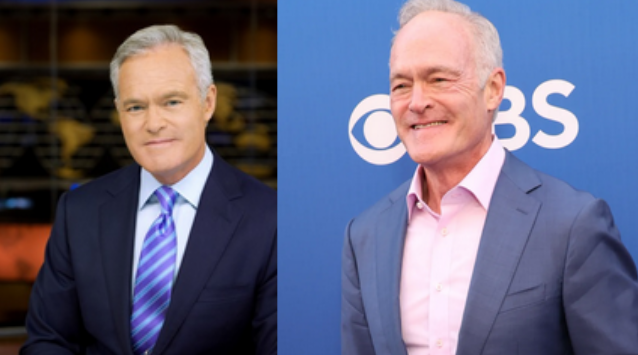
The landscape of American television journalism is experiencing a seismic shift. CBS News has abruptly fired Scott Pelley, one of its most recognizable and tenured correspondents, following a highly charged confrontation with the newly appointed executive producer of 60 Minutes.
The sudden termination marks a dramatic escalation of ongoing internal conflicts at the historic newsmagazine, revealing deep-seated tensions between the established reporting staff and the network’s new editorial leadership under the Paramount Skydance corporate umbrella.
The Boiling Point: Inside the Combative Staff Meeting
The catalyst for Pelley’s dismissal was an intensely heated staff meeting held on Monday. The gathering was organized to formally introduce the 60 Minutes team to Nick Bilton, a veteran technology journalist and documentary filmmaker recently appointed as the program’s executive producer by CBS News Editor-in-Chief Bari Weiss.
According to internal audio recordings and sources present in the room, the introduction quickly derailed. When Bilton attempted to assure the staff that Weiss “loves this institution,” Pelley interrupted to deliver a scathing critique of the new leadership.
- Accusations of “Murdering” the Show: Pelley fiercely pushed back against the new editorial direction, directly accusing Weiss of intentionally destroying the venerable newsmagazine, which has been a television staple since September 1968. “She does not love this place,” Pelley reportedly stated. “She was brought in to kill it, and she’s been doing exactly that.”
- Questioning Past Dismissals: Pelley also confronted Bilton regarding the recent firings of former executive producer Tanya Simon and fellow correspondents Sharyn Alfonsi and Cecilia Vega. While Bilton noted those decisions were made before his tenure, the exchange remained highly combative.
- A Direct Challenge: In a particularly tense moment, Pelley questioned why Bilton would accept the position knowing he would “never be welcomed here.” Bilton firmly replied that his 25-year journalism career had prepared him to handle powerful individuals and that he was not intimidated by the pushback.
The Termination: “Remarkable Incivility and Contempt”
The fallout from the meeting was immediate. The following day, Bilton sent a formal termination letter to Pelley, effectively ending his decades-long career at the network “for cause effective immediately.”
In the letter, Bilton cited Pelley’s behavior as the primary reason for his dismissal, stating:
“Your antipathy to the future of the show has come through loud and clear. Yesterday’s performative display of hostility — enacted in front of the staff instead of in a civil, private conversation — demonstrated that you have no interest in contributing to the future success of the show, or approaching my new tenure with a mind open to collaboration and progress.”
Bilton also sent a separate memorandum to the 60 Minutes staff confirming that the network had “parted ways” with Pelley, noting that despite attempts to find common ground over the weekend, Pelley had chosen a different path.
Underlying Tensions and Recent Controversies
Pelley’s departure is the most visible symptom of broader turmoil within 60 Minutes. Since the media conglomerate Paramount was taken over by David Ellison’s Skydance Media, the news division has faced significant editorial and structural changes.
Staff members have frequently clashed with Editor-in-Chief Bari Weiss over the program’s direction. A notable incident occurred last year involving correspondent Sharyn Alfonsi, who clashed with Weiss over a segment regarding the deportation of Venezuelan men to a high-security prison in El Salvador. Alfonsi alleged the story was shelved for “political reasons,” while Weiss maintained it simply was “not ready” for broadcast. The segment eventually aired in January with added statements from the White House and the Department of Homeland Security.
The End of a 40-Year Legacy
Scott Pelley’s firing represents the unceremonious end of a nearly 40-year legacy at CBS News. Pelley joined the network’s news division in 1989 and steadily rose through the ranks. He served as the anchor of the CBS Evening News from 2011 to 2017 and was a cornerstone correspondent for 60 Minutes for over two decades, earning a reputation for hard-hitting investigative journalism.
With Pelley’s exit and the recent departure of 20-year veteran Anderson Cooper last month, the remaining roster of 60 Minutes correspondents now relies heavily on seasoned veterans like Lesley Stahl, Bill Whitaker, and Jon Wertheim to carry the torch forward.
As Skydance Media looks to further expand its media empire—currently pursuing a $110 billion acquisition of Warner Bros. Discovery (the parent company of CNN and HBO)—the dramatic shakeups at CBS News signal a potentially volatile new era for traditional broadcast journalism.
Disclaimer:
This article is a journalistic rewrite produced for informational purposes. The information is based on independent reporting and publicly available updates from NBC News. Internal corporate decisions, quotes, and employment statuses are subject to the respective network’s official statements.
Related News



Follow us for Latest Updates
