Jaipur | May 17, 2026
The Government of Rajasthan has fully mobilized its administrative machinery to ensure a seamless, reliable, and uninterrupted water supply across rural territories during the peak summer season. Following explicit directives from Chief Minister Bhajan Lal Sharma, the Public Health Engineering Department (PHED) successfully executed the fourth phase of its state-level special oversight and rapid-repair campaign on Saturday.
Initiated to establish a highly responsive and resilient rural water management framework, this specialized weekly campaign will continue to operate every Saturday until June 30, 2026. Its primary mandate is to protect rural households from seasonal water scarcities and maintain strict supply stability.
On-the-Ground Rapid Repairs and Structural Interventions
According to validated data released by departmental secretaries, technical and engineering teams executed extensive, high-impact structural interventions during Saturday’s statewide drive:
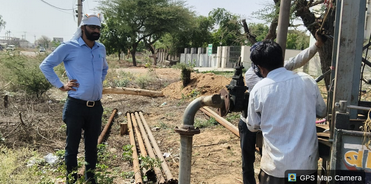
- Field Inspections by 575 Vigilance Squads: To conduct on-the-spot physical verifications of water infrastructure and identify systemic bottlenecks, 575 specialized task forces were deployed across various village panchayats.
- Restoration of Handpumps: Recognizing the critical role of groundwater sources during peak summer weeks, engineering teams successfully repaired and reactivated 662 non-functional and defective handpumps, restoring vital local water points.
- Pipeline Reinforcement and Leakage Control: To prevent water wastage and preserve distribution pressure across terminal pipeline networks, technical teams permanently plugged and repaired 475 critical pipeline leakages.
- Comprehensive Infrastructure Maintenance: Beyond primary repairs, teams completed 1,598 auxiliary technical improvement works on rural water distribution systems within record timeframes.
Immediate On-Site Resolution of 2,687 Public Grievances
The defining attribute of this targeted campaign remains its swift, citizen-centric grievance redressal mechanism. Operating with high structural coordination, the field technical teams evaluated and immediately resolved 2,687 localized complaints on-site, addressing issues ranging from low pressure and valve malfunctions to localized supply disruptions. This rapid administrative response has fostered a strong sense of public satisfaction across rural communities.
This synchronized campaign highlights a proactive, action-oriented governance model within the state administration. Under the leadership of Chief Minister Bhajan Lal Sharma, the state government continues to prioritize rural civic infrastructure—particularly sustainable water supply management—positioning it as a core pillar of long-term regional development.
Disclaimer: This rural infrastructure and public utility report is compiled directly from verified progress ledgers, administrative field statements, and statistical briefs published by the Department of Public Health Engineering (PHED), Government of Rajasthan, on May 17, 2026. Project schedules, district-wise operational nodal structures, and final technical data remain subject to subsequent departmental audits. For authorized procedures on lodging water infrastructure complaints within specific gram panchayats, citizens should consult the official state helpline (181) or the authorized digital portal of PHED Rajasthan.
To read this news in Hindi, click here: missionkiawaaz.in