


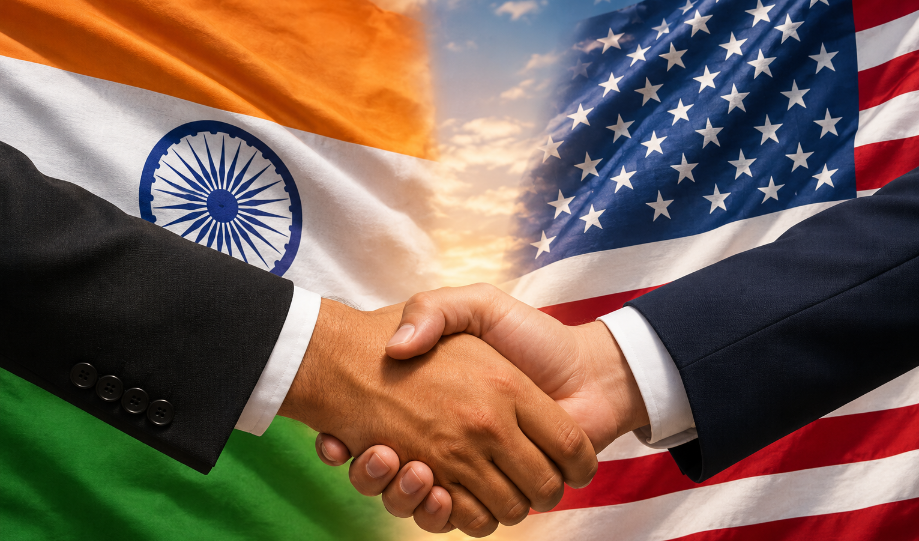
Washington / New Delhi | May 8, 2026
A recent ruling by a US federal court has sent shockwaves through the international trade community. The United States Court of International Trade, in a 2-1 majority decision, has struck down President Donald Trump’s across-the-board 10% import tariffs, labeling them unconstitutional. Following this verdict, experts suggest that India should adopt a “wait and watch” policy before committing to any major bilateral trade agreements with the US.
The Court’s Verdict and Legal Grounds
The ruling, delivered on May 7, held that the Trump administration lacked the legal authority under Section 122 of the Trade Act of 1974 to impose a blanket 10% levy on all imported goods.
- “Unauthorized by Law”: The court termed the tariffs “invalid,” stating that the administration failed to establish the “large and serious United States balance-of-payments deficits” required by the statute to justify such emergency measures.
- A Short-Lived Regime: Introduced on February 20, these tariffs faced a successful legal challenge in less than 50 days.
Growing Concerns for India
According to Ajay Srivastava, founder of the think tank GTRI, the volatility in US tariff policy poses significant risks for India.
- Policy Instability: With major Trump-era trade actions being repeatedly struck down by US courts, it is becoming increasingly difficult for India to justify long-term trade commitments.
- One-Sided Negotiations: Currently, the US appears unprepared to reduce its standard Most-Favoured-Nation (MFN) tariffs, yet it expects India to eliminate duties across most sectors. Experts warn that any deal under these conditions could result in India offering permanent market access without receiving meaningful, legally secure benefits in return.
Friction in Trade Negotiations
This ruling arrives at a sensitive juncture, just as both nations claimed to be nearing the finalization of the first phase of a Bilateral Trade Agreement (BTA).
- Premature Optimism: US Deputy Secretary of State Christopher Landau recently suggested the two countries were “very, very close” to a deal.
- Recalibration Required: However, with the Supreme Court previously striking down “reciprocal tariffs” in February and now the 10% flat tariff being invalidated, the entire framework for the negotiations has been destabilized.
The Road Ahead: New Avenues of Investigation
Experts anticipate that the Trump administration may now pivot away from blanket tariffs toward more targeted trade actions.
- Section 301 Probes: The USTR recently initiated investigations into the industrial policies of 16 economies, including India.
- Forced Labor Inquiries: Another probe covering 60 economies is examining labor practices, which could create new non-tariff barriers for Indian exporters.
Expert Analysis (E-E-A-T)
This report is based on US trade statutes and insights from global trade specialists who emphasize that the current legal friction within the US indicates a lack of “stable” trade policy. For India, the priority remains securing concessions that are legally predictable and protected from sudden executive reversals.
Disclaimer: This news report is based on the recent US federal court ruling and expert commentary. The final outcome of trade negotiations depends on subsequent diplomatic discussions and potential appeals in the US judicial system.