
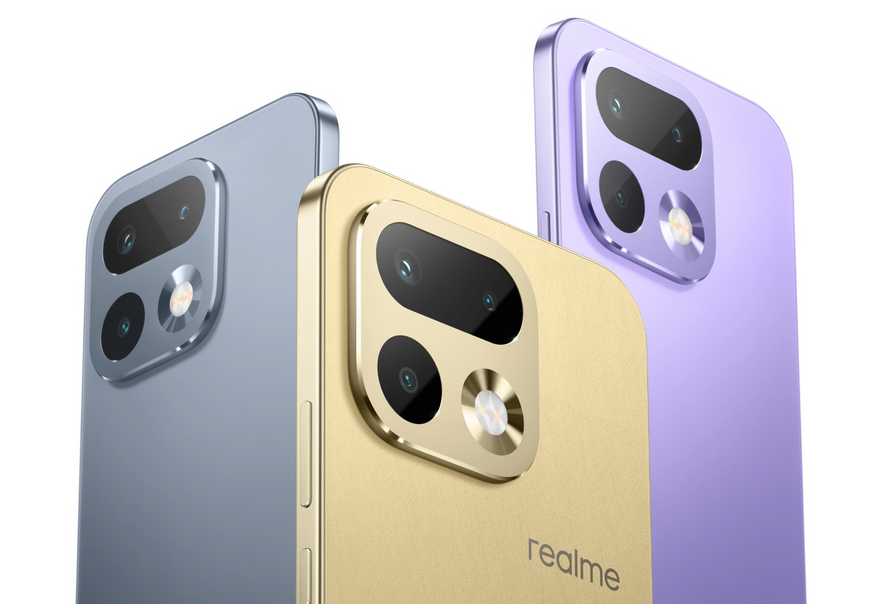
Realme 16 5G (2026) review: 6.57″ 120Hz AMOLED, Dimensity 6400, 50MP cameras, 7,000mAh battery (60W), unique selfie-mirror design. Full specs, performance, pros/cons, and comparisons.
The Realme 16 5G is a midrange Android smartphone launched in 2026, notable for its slim “Air Design” body, enormous 7,000 mAh battery, and a unique rear “selfie mirror” feature that lets you use the main 50 MP camera for selfies. It sports a sharp 6.57-inch 120 Hz AMOLED display with superb brightness (up to 4,200 nits peak claimed) and an IP69K dust/water resistance rating – rare for this class. Under the hood is a MediaTek Dimensity 6400 Turbo chip (6nm, octa-core 2×2.5 GHz) paired with 8 GB or 12 GB RAM and 256 GB UFS2.2 storage. Realme bundles Android 16 with its fresh Realme UI 7.0, promising three years of OS updates and four years of security patches.
In everyday use, the Realme 16 delivers smooth multitasking and media consumption thanks to its fluid display and responsive UI. Battery life is excellent – you can easily get over 9–10 hours of screen-on time on moderate use (social apps, video, photography), and the 60 W fast charger refuels 0–100% in about 1.5 hours. Camera hardware is decent on paper (50 MP main sensor), but lacks an ultra-wide lens; users will find day-light shots okay, while low-light and video are merely average. Overall, Realme 16 5G is a balanced, long-lasting midrange phone with standout battery and design, suited for users who prioritize battery life and selfie quality over top-end performance or flagship-grade cameras.
Specifications & Design
- Display: 6.57-inch Full HD+ (2376×1080) AMOLED, 120 Hz refresh, 10‑bit color, HDR10+, Dragontrail Star D+ glass. Peak brightness ~4,200 nits. Very high contrast and deep blacks.
- Processor: MediaTek Dimensity 6400 Turbo (6 nm) – Octa-core (2×2.5 GHz Cortex-A76 + 6×2.0 GHz A55), Mali-G57 MC2 GPU. Mid-tier chipset targeted at efficiency.
- Memory: 8 GB or 12 GB LPDDR4X RAM; 256 GB UFS 2.2 storage (no card slot; single microSD via SIM2 slot). Good space for apps and media, with RAM Boost feature.
- Battery & Charging: 7,000 mAh non-removable Li-ion battery. Rated for two-day endurance. Supports 60 W wired fast charging (4%→100% in ~90 min). Reverse charging (power bank mode) at slower 5 W/10 W.
- Rear Cameras: Dual setup: 50 MP main (wide, Sony IMX882 sensor, f/1.8, PDAF, no OIS), plus a color spectrum / depth sensor (2 MP) for enhancing Portrait shots. No ultra-wide or telephoto. Ring LED flash around the camera bar improves low-light selfies.
- Front Camera: 50 MP wide, coupled with the rear “selfie mirror” (tiny reflective window) – so you can use the main rear 50 MP camera for selfies. (The front sensor is still present as a second lens.) AI modes (LumaColor, AI Edit Genie, Vibe Master filters) enhance selfies and editing. Video is capped at 1080p@30fps with gyro-EIS.
- OS & Features: Ships with Android 16 and Realme UI 7.0. Clean interface with features like Ultra Battery Saver and customized AI camera features (Edit Genie, Instant Clip). Promised 3 OS upgrades + 4 years of security.
- Connectivity: 5G (SA/NSA) bands, Dual-SIM (nano), 4G VoLTE, Wi-Fi 6 (802.11a/b/g/n/ac dual‑band), Bluetooth 5.3 (LE, aptX, LDAC), NFC (market-dependent), USB-C 2.0, IR blaster. No 3.5 mm jack.
- Sensors: Under-display ultrasonic fingerprint, accelerometer, gyro, proximity, compass. No stereo speakers (single bottom-firing).
- Build & Design: 158.3×75.1×8.1 mm, 183 g. Glass front (Dragontrail), plastic frame & back. Unique horizontal camera bar with “Air Design”: ultra-slim (8.1 mm) and flat, reminiscent of a Google Pixel. It’s IP68/IP69K certified for dust and water (high-pressure jets, immersion) – rare in this price range.
- Colors: White Swan (shiny “Gleaming Wings” gradient) or Black Cloud (matte). The white variant has a holographic “wing” pattern on back.
A bright 6.57″ 120 Hz AMOLED display lights up the Realme 16 5G’s Air Design body.
Performance & Battery Life
The Realme 16 5G’s Dimensity 6400 Turbo and up to 12 GB RAM deliver solid daily performance. App loading, web browsing, and multitasking are generally smooth – the UI is responsive and animations remain fluid on the 120 Hz screen. In benchmarks, it scores around 390–450K in AnTuTu (reflecting midrange levels) and roughly 668 (single-core)/1945 (multi-core) in Geekbench.
For graphics-heavy gaming, the phone can handle popular titles but with limits. Light games (e.g. PUBG Mobile/BGMI, COD Mobile) run at 60 fps smoothly at medium settings. However, graphically intense games (like Genshin Impact) expose the hardware’s limits: you’ll see occasional stutters, thermal throttling and frame drops at high settings. Multitasking under heavy load (many apps open) can also introduce minor pauses. Overall, the performance is “decent enough to not get in your way” for everyday use, but not aimed at hardcore gamers.
Battery life is a standout. With its huge 7,000 mAh pack, the Realme 16 5G easily lasts a full day and a half or more under typical mixed use (social media, camera, streaming, calls). The reviewer logged about 9–9.5 hours of on-screen time in moderate use, and often had 20–30% left by bedtime. In practice, you can comfortably go two days between charges with light use. Fast charging (60 W) replenishes power fairly quickly: in tests it took about 90 minutes to go from near-empty to full. Note that like many large-battery phones, it gets slightly warm during heavy charging and gaming, but nothing extreme.
The Realme 16 5G handles everyday tasks smoothly. However, under sustained gaming or video recording it can warm up and throttle slightly, as typical for the Dimensity 6400 midrange chipset.
Cameras and Imaging
The rear camera system is basic but unique in concept. The main camera is a 50 MP wide sensor (Sony IMX882, f/1.8) accompanied by a tiny secondary sensor (color spectrum/depth). There is no ultra-wide or macro lens, which limits versatility. The big highlight is the rear “Selfie Mirror” – a small reflective window in the camera bar that helps you frame selfies using the main 50 MP camera. With voice “Say Hi” or gesture control, you trigger a 3-second countdown, and a ring-shaped LED flash provides soft fill light. Effectively, you get the same high-resolution main cam for self-portraits, which yields crisp, detailed selfies in daylight.
In practice, daylight photos from the 50 MP sensor look sharp and colorful; Realme’s LumaColor processing tends to favor punchy colors but generally produces pleasing results in good light. Portrait mode works decently on faces thanks to the depth sensor, though edge-detection can sometimes be uneven. Low-light photos are only average – noise climbs quickly and fine detail is lost (the reviewer called night shots “downright mediocre”). There is no OIS, so video is stabilized only via electronic EIS (and maxes at 1080p/30). Video quality is middling; avoid 4K (not supported) and stick to 1080p.
The front 50 MP camera yields bright, well-exposed selfies outdoors, especially with the mirror and ring flash. Indoors or at night, the flash helps a lot. Overall, portrait selfies with this setup are surprisingly good for a midranger. However, be aware: because there is no ultra-wide, you can’t capture wide-angle group selfies except by stepping back far. Also, no macro or telephoto limits other shooting modes. The camera app includes Realme’s usual AI enhancements (AI Edit Genie, Instant Clip creative modes, and Vibe Master preset filters) for fun editing and social media.
Camera app features: Standard Realme camera UI with AI modes. Has Night mode (for low-light), Portrait with beauty adjustments, HDR, time-lapse, and panorama. Vlogging and social filters built-in. Overall interface is smooth.
Sample Images: (Not included here.) In summary, camera performance is a weak spot: good for daylight snaps and very good selfie portraits, but struggles in dim light and lacks versatility due to missing ultra-wide. The Realme 16 5G is a good choice only if you value battery and the novelty of the rear selfie mirror; if camera performance is a priority, there are better-equipped phones at this price.
Software and Updates
Realme UI 7.0 (based on Android 16) comes preloaded, and it’s clean and user-friendly. Bloatware is minimal, and most stock apps are Google’s. The UI offers useful features like customizable AOD (Always On Display) patterns, FlexDrop multitasking windows, and Game Space optimizations. Realme promises three major Android updates (Android 17 and 18) and four years of security patches for this device, which is reassuring at this price. At launch it should get Android 17 early (UI 8.0) later in 2026. Software performance is snappy; occasional mid-light background tasks and notifications are well managed by the streamlined UI.
Connectivity is solid: 5G, Wi-Fi 6, Bluetooth 5.3, and NFC are all supported (in most regions). Call quality is clear. There’s no headphone jack, but you get a USB-C dongle in the box and Bluetooth audio works fine (aptX, LDAC). The in-display fingerprint sensor is fast and accurate in most conditions, aided by the matte back for grip. Face unlock also works using the selfie camera.
Pros and Cons
Pros:
- Massive 7,000 mAh battery – outstanding 2-day use on light to moderate tasks. Fast 60W charging.
- Beautiful 6.57″ AMOLED display: 120 Hz fluid, extremely bright in sunlight, excellent contrast and color.
- Unique Air Design: super slim (8.1 mm), IP69K water/dust resistance (durable), lightweight (183 g).
- Selfie mirror design: high-res rear camera (50 MP) for top-notch self-portraits.
- Solid build and Realme UI. Good storage (256 GB) and RAM (up to 12 GB).
Cons:
- Camera system limited: no ultra-wide lens, main camera lacks OIS (no image stabilization). Night photography is weak.
- Performance modest: Dimensity 6400 is not very powerful, so high-end gaming causes stutter.
- Mono speaker (audio is flat, lacks depth) – not great for music/video.
- Relatively high price for the hardware (₹31,999 for 12/256 in India). Strong competition exists.
- Large size may be awkward for very small hands. Plastic back feels less premium (though it helps weight).
Value & Target User
The Realme 16 5G is aimed at users who want battery life and selfie quality above all. If you need an all-day phone with a big screen that stays on for two days of use, this fits. Its selfie mirror concept is great for vloggers or selfie enthusiasts who want better selfie camera output without compromising front-camera quality. It’s also attractive to anyone wanting a slim, IP-rated midranger under ₹35K.
However, if top-notch performance or photography versatility matters more, consider other options (see comparison below). At its launch price (around ₹32K for the 12/256 variant), it competes with phones like the Realme P4 Power (with even bigger battery), Samsung’s midrange models, or Xiaomi/Poco devices. For purely battery-focused users, it offers excellent value (trading off camera finesse). The 8 GB/256 GB model is fine for moderate users; power users may prefer 12 GB/256 GB for more headroom (though at higher cost).
Despite its midrange chipset, the Realme 16 5G handles everyday tasks smoothly. Battery longevity is its real strength – you can comfortably browse, stream, and message all day without worrying about charging.
Comparison to Competitors
| Feature / Phone | Realme 16 5G | realme P4 Power 5G | Motorola Edge 70 5G | Infinix Note 40 Pro 5G |
|---|---|---|---|---|
| SoC (CPU/GPU) | MediaTek Dimensity 6400 Turbo (2×2.5 GHz & 6×2.0 GHz)<br>Mali-G57 MC2 | MediaTek Dimensity 7400 Ultra (2.6 GHz & 2.0 GHz)<br>Mali-G68 MC4 | Qualcomm Snapdragon 7 Gen 4 (2.8 GHz + 2.4 GHz + 1.8 GHz)<br>Adreno (Gen4) | MediaTek Dimensity 7020 (4×2.0 GHz + 4×2.0 GHz)<br>Mali-G57 MC2 |
| Display | 6.57″ FHD+ AMOLED, 120 Hz, 4500 nits peak (Realme UI 7.0) | 6.8″ FHD+ AMOLED, 144 Hz | 6.7″ FHD+ AMOLED, 120 Hz (curved edges) | 6.78″ FHD+ AMOLED, 120 Hz (1B colors, 1300 nits peak) |
| RAM/Storage | 8/12 GB + 256 GB UFS2.2 | 8/12 GB + 128/256 GB UFS3.1 | 8 GB + 256 GB UFS3.1 | 8 GB + 256 GB eMMC 5.1 |
| Rear Cameras | 50 MP main + 2 MP depth<br>(No ultra-wide)<br>Ring flash (selfie mirror) | 50 MP main + 8 MP ultra-wide | 50 MP main + 50 MP ultra-wide (both with OIS) | 108 MP main + 2 MP + 2 MP (depth/macro) |
| Front Camera | 50 MP wide (with rear mirror) | 16 MP wide | 50 MP wide | 32 MP wide |
| Battery / Charging | 7000 mAh, 60 W wired fast charge | 10001 mAh, 80 W charge | 5000 mAh, 68 W (TurboPower) | 5000 mAh, 45 W |
| Build / Extras | IP68/IP69K dust & water, plastic frame/back, selfie mirror design | Plastic back, Gorilla Glass 5 front, 3.5mm jack | Gorilla Glass 7i front, IP68 rated, ultra-thin (6.8 mm), stereo speakers | Glass front, plastic back, basic water resistance (IP53?), no fingerprint sensor? |
| Price (approx.) | ₹29,999 (8/256) / ₹31,999 (12/256) | ₹24,769 (8/128) / ₹32,999 (12/256) | ₹29,229 (8/256) | ~$300 (₹24–28K) at launch (8/256) |
| Key Differences | Huge battery, selfie-mirror, IP69K, lighter (183 g) | Even bigger battery (10k), high-refresh 144 Hz display, ultrawide cam, lower-res selfie | Slim design, Snapdragon SoC (better single-core), dual 50 MP cameras with OIS, 68W fast charge | Highest-res main cam (108 MP), large screen, lower battery, MIUI/AOSP style OS |
The table above compares the Realme 16 5G to three similar midrange phones. The P4 Power 5G is its closest sibling (same company) with a 10,001 mAh battery and an ultrawide camera, but a slower processor. The Motorola Edge 70 is a thin Snapdragon-based phone with dual 50 MP cameras and 68W charging, but half the battery capacity. The Infinix Note 40 Pro 5G has a huge 108 MP sensor and 120Hz display at a lower price, but a much smaller battery and weaker SoC.
Buying Advice & Recommended Model
- Choose 12 GB RAM if possible: The 12+256 GB configuration offers better multitasking longevity and future-proofing for intensive apps. If budget is tight, the 8+256 GB model is still fine for most users (storage is the same).
- Colors: The White Swan variant (with glittery “Gleaming Wings” back) looks more premium, while Black Cloud is plain matte. Both have the same performance.
- Bundle & Accessories: Realme often bundles a 60W charger, USB-C cable, and a basic case. We still recommend buying a quality TPU case or clear bumper to protect the sleek design. A good screen protector (tempered glass) is also advisable.
- Comparison Shopping: If the selfie-mirror isn’t a must-have, compare similarly priced phones – e.g. Realme P4 Power or Samsung Galaxy M series – to see if you prefer faster SoC or additional cameras. But for battery life and novelty of the selfie-mirror, the Realme 16 holds its own.
- Where to Buy: Official stores (Realme website, Amazon, Flipkart) often launch with promo offers or bank discounts. Check current deals. Prices may vary by region; always confirm the spec (RAM/storage) when purchasing.
Common Issues & Tips
From early user feedback and forums, a few points are worth noting:
- Heat & Performance Throttle: Under heavy gaming or prolonged stress, the phone can heat up and the CPU may throttle, causing minor lags. To mitigate, use “Balanced” performance mode and avoid running intensive games at max graphics. Give the phone breaks to cool.
- Battery “Anxiety”: Even with 7k mAh, using 5G, max brightness, or heavy apps all day can drain battery faster than expected. Tips: disable 5G when not needed, lower screen brightness, and use the Ultra Battery Saver mode if going into the night. A high-capacity power bank can also be handy for travel.
- Audio & Video: Speaker output is mediocre. Use headphones or Bluetooth speakers for a better experience. Enable LDAC/aptX if using Bluetooth headphones. There is no 3.5mm jack, so pack the USB-C dongle.
- Camera Limitations: Remember there’s no ultrawide lens. For wide shots, back up or use panorama mode. Night shots are best done with a tripod or flash if available. The selfie mirror trick works best outdoors or with good lighting – indoors without flash, selfies may be less sharp.
- Protect the Device: The glossy white back can attract fingerprints and scratches. Invest in a case (Realme sells silicone cases with a clip) and a screen protector. The IP69K rating means it’s water-resistant, but avoid deliberate submersion beyond splashes.
- Software Updates: Keep the phone updated. Realme UI 7.0 is mostly bug-free, but patches may improve stability. Register your device in Realme’s app to get updates promptly.
“The display is genuinely enjoyable, battery life is excellent and performance is decent enough to not get in your way… it never feels quite complete. The cameras are inconsistent and struggle badly at night… the absence of an ultra-wide lens is hard to ignore.” – (Review Verdict)
Release Timeline
2025-01-30Announced globally(RealmeIndia)【10†L99-L105】2026-02Global release inChina/Vietnam/etc.(Feb2026)【10†L101-L106】2026-04-02Official India launch(7,000mAh, SelfieMirror)【7†L42-L50】2026-04Expected Pakistanlaunch (teased afterIndialaunch)【33†L147-L154】2026-07Realme UI 8.0 beta(Android 17) rolloutbegins (expected)2027-01Scheduled update toAndroid 17 (RealmeUI 8.0)Realme 16 5G Release & Updates
Conclusion
The Realme 16 5G is a battery-centric smartphone with an intriguing twist for selfie lovers. Its huge 7,000 mAh battery, fast display, and novel selfie mirror set it apart in the midrange segment. You get ultra-long endurance and a bright, smooth screen for everyday tasks. However, compromises exist: the chipset is moderate, the speakers and low-light camera performance are average, and the lack of ultra-wide camera might disappoint photography enthusiasts. If those trade-offs are acceptable for your needs (and you love the idea of top-tier selfie hardware), the Realme 16 5G offers a unique blend of features and strong battery life in 2026.
15 SEO Tags (comma-separated): Realme 16 5G, Realme 16 5G review, Realme 16 specifications, Realme 16 2026, Realme 16 battery life, Selfie mirror phone, 7,000mAh battery smartphone, Dimensity 6400 phone, midrange smartphone review, Realme UI 7.0, smartphone comparison, IPL 2026 article, realme 16 design, Realme P4 Power comparison, Realme 16 vs competitors.