Why the U.S.–Iran Confrontation Is Being Seen as More Than Just a Nuclear Dispute
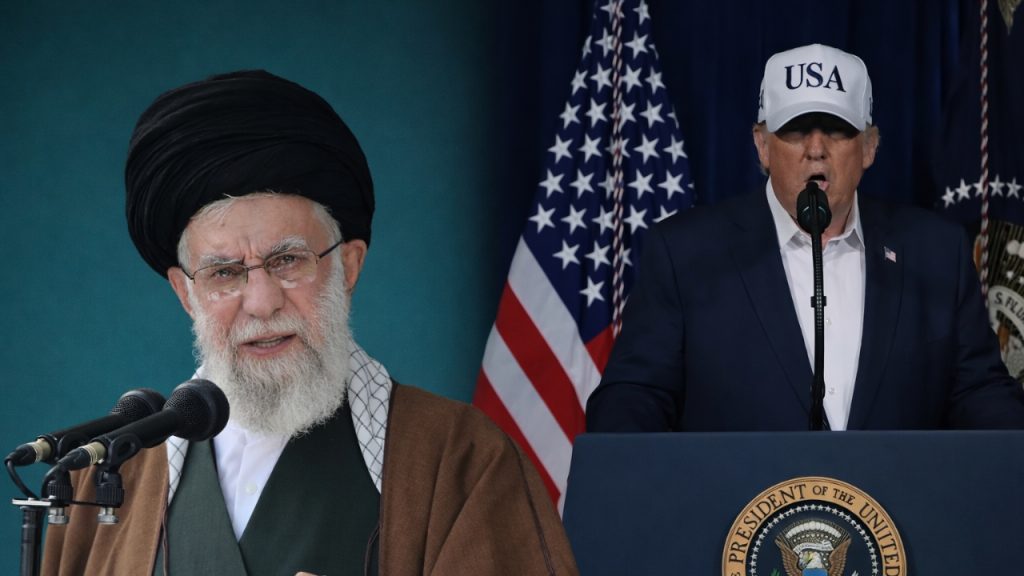
US – Iran News : Tensions between the United States, Israel, and Iran have once again pushed the Middle East into a period of extreme uncertainty. Reports claiming that the United States has targeted Iran’s Supreme Leader, Ayatullah Ali Khamenei, have intensified global debate. While official confirmations and verified details remain crucial in such high-stakes situations, the broader political questions surrounding U.S. policy toward Iran are now at the center of international discussion.
The Nuclear Question: Core Issue or Strategic Justification?
For years, Washington has accused Tehran of secretly advancing its nuclear program beyond civilian purposes. Iran, on the other hand, has consistently denied seeking to build nuclear weapons, insisting its program is intended for energy and research.
International oversight bodies such as the International Atomic Energy Agency have monitored Iran’s nuclear activities, but disagreements over transparency and compliance have persisted. The United States argues that preventing nuclear proliferation in the Middle East is a matter of global security.
Critics, however, question why some nations possess nuclear arsenals while others face severe consequences for pursuing similar capabilities.
Read Also –
Power Politics in the Western Hemisphere
Analysts have drawn parallels between U.S. actions in the Middle East and its historic approach in Latin America. A policy paper published by the Wilfried Martens Centre for European Studies argues that U.S. interventions are often less about restoring democracy and more about maintaining strategic dominance.
Former U.S. President Donald Trump was frequently vocal about projecting American strength globally. Some observers describe his approach as a modern extension of the James Monroe-era doctrine, often referred to as the Monroe Doctrine. The doctrine originally asserted U.S. opposition to European interference in the Americas.
In 1904, President Theodore Roosevelt expanded this principle through what became known as the Roosevelt Corollary, asserting that the United States had the right to intervene in Latin American nations to stabilize economic affairs and prevent European involvement.
Some analysts argue that modern U.S. foreign policy reflects similar ideas of regional dominance — though now applied beyond the Western Hemisphere.
Read Also –
From Iraq to Venezuela to Iran
The United States has previously justified military or political intervention on security grounds. The removal of Iraqi leader Saddam Hussein in 2003 was officially linked to concerns about weapons of mass destruction. In Latin America, pressure on Venezuelan President Nicolás Maduro was framed around democracy and anti-narcotics efforts.
Critics argue that these actions reflect a broader pattern of strategic intervention aimed at preserving American geopolitical influence. Supporters counter that such measures are necessary to prevent instability, terrorism, and nuclear proliferation.
Why Doesn’t the U.S. Want More Nuclear States?
At the heart of the debate lies a fundamental question: why does Washington oppose nuclear expansion in countries like Iran when several nations already possess nuclear arsenals?The United States maintains that limiting nuclear weapons reduces the risk of regional arms races and potential catastrophic conflict. Opponents view this stance as selective enforcement of global power structures.
What Does America Ultimately Want?
Foreign policy experts remain divided. Some believe the primary objective is deterrence — preventing adversarial regimes from gaining capabilities that could threaten U.S. allies, particularly Israel. Others argue the goal is strategic containment of rival influence in energy-rich and politically sensitive regions.
Read Also –
As tensions escalate, the international community watches closely. Whether the confrontation centers on nuclear security, regional dominance, or ideological rivalry, one fact is clear: the consequences extend far beyond Washington and Tehran.
Related News



Follow us for Latest Updates

3 Thoughts on “Why the U.S.–Iran Confrontation Is Being Seen as More Than Just a Nuclear Dispute”