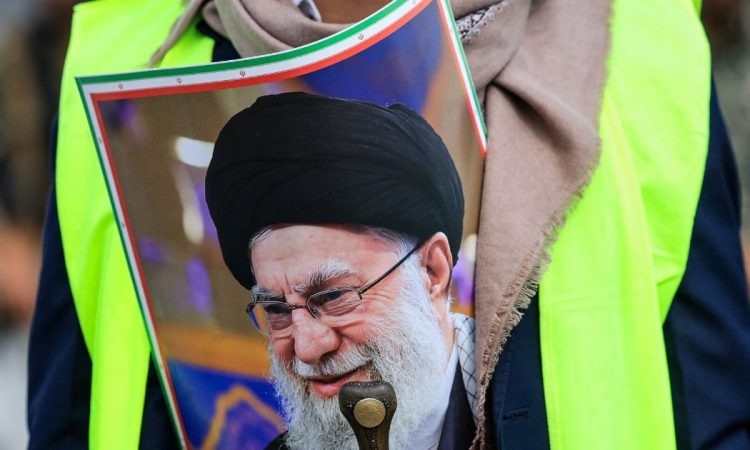
If we look at the cremation traditions and customs of Shia Muslims, then there is a custom that the last rites should be performed within an hour of death or as soon as possible. In such a situation, the question arises that why Iran’s former supreme leader Ayatollah Ali Khamenei has not been laid to rest even after 13 days of his death on February 28.
Khamenei was killed in a joint US-Israeli air strike on February 28. His funeral is being postponed continuously due to security reasons, because his funeral procession will be very large, on which there is a possibility of attack.
There were 1 crore people in the funeral procession of the first Ayatollah.
When the funeral of Iran’s first supreme leader Ayatollah Ruhollah Khomeini was held in 1989, about 10 million people attended it. This is considered the largest mass in modern history, it was about 1/6 of the population of Iran at that time. Due to such a huge crowd, there was a stampede during the funeral procession. For this reason, it is also believed that a large crowd will gather at Khomeini’s funeral. For this reason it is being postponed now. Khamenei’s body has been kept safe in a secret place.
What are the funeral rules during wartime?
In the rules of Shia Islam, in times of war or danger, it is generally advised to bury the dead body immediately after Ghusl i.e. bath, shroud and Janaza prayers, but preservation is allowed in exceptional circumstances.
Shia Muslims around the world are expressing grief after Khamenei’s death.
How are dead bodies preserved?
The dead body is kept in a cool, dry and safe place to prevent decomposition; Sometimes natural cold or ice is used. After shrouding, the body can be kept locked in a wooden box or in a safe room until burial is possible. If there is a security risk, delay is justified based on the advice of scholars. However, chemical preservation i.e. embalming is prohibited in Islam; Only natural methods are adopted.
How are ashes laid to rest?
Iran is a Shia-majority country. Most of the Muslims there follow the Tawelwar Shia Islam tradition. Therefore, the rules of burial after death are also according to Shia Islamic tradition. In these traditions, great emphasis is placed on religious rituals, simplicity and early burial. By the way, in Shia Islam the tradition of cremation is like this.
1. Preparation of the body after death i.e. Ghusl-e-Maiyat
When a person dies, the first thing that is done is to wash the dead body in a religious manner. This is called Ghusl-e-Maiyat. In this process there is a tradition of washing the dead body three times.
– First mix camphor or similar aromatic thing in water.
– then with normal water
– Finally with pure water
This work is usually done by people of the same gender, i.e. men for male mortal remains and women for female mortal remains. The dead body is washed by pouring water on seven parts: head, right shoulder, left shoulder, right thigh, left thigh, right leg and left foot.
2. Wearing a shroud
After Ghusl, the dead body is wrapped in a white cloth which is called Kafan. In Shia tradition there are generally three clothes which are used in it. For the shroud, five unstitched white sheets are used for the man. There are seven sheets for women.
– cloth like nappy
– long wrapping cloth
– big upper shroud
Sometimes prayers or sacred sentences are also written on the shroud, especially in the names of Imams.
3. Hanut i.e. applying fragrance
In Shia tradition there is a special process called Hanut. In this, camphor is applied on parts of the forehead, hands, knees and feet. It is believed that this brings respect to the deceased. This is a religious tradition.
4. Funeral prayers
Funeral prayers are offered before burial. In Shia tradition, five Takbir Allahu Akbar are said in Namaz-e-Janaza. This differs slightly from the Sunni tradition, where there are usually four takbirs.
5. Tradition of early burial
In Islam it is generally attempted that burial take place within 24 hours of death. This is the tradition in Iran also. The dead body is not kept in the house for a long time, unless there are legal or medical reasons.
6. Method of burial in a grave
There are some special rules while burying. The dead body is kept directly in the ground. The body is made to lie on the right side. The face is kept in the direction of Mecca. The direction of Mecca is called Qibla, which is also the direction of prayer in Islam.
7. Structure of the grave
Graves in Iran are usually simple. At many places, a small groove is made on one side of the grave, in which the dead body is kept. Then soil is filled on top. A stone is placed on the grave on which the name and date of the deceased is written.
8. Tradition of mourning and mourning
Condolence meetings take place after the burial. In Iran, special prayers and gatherings are usually held on the third day, seventh day and fortieth day. The ritual of the fortieth day is given great importance. This tradition is also considered to be related to the memory of the martyrdom of Imam Hussain. However, many Iranian Muslims want him to be buried near holy Shia sites.
Where will Khamenei be buried?
Iran’s supreme leader Ali Khamenei is planned to be buried near the Imam Reza Shrine in the city of Mashhad. Mashhad is his birthplace and also a major pilgrimage center of Shia Islam. Considering his position, memorial-like decoration is possible in important areas of the Shrine.
