Middle East Conflict Deepens on Day Five After US-Israel Strikes on Iran
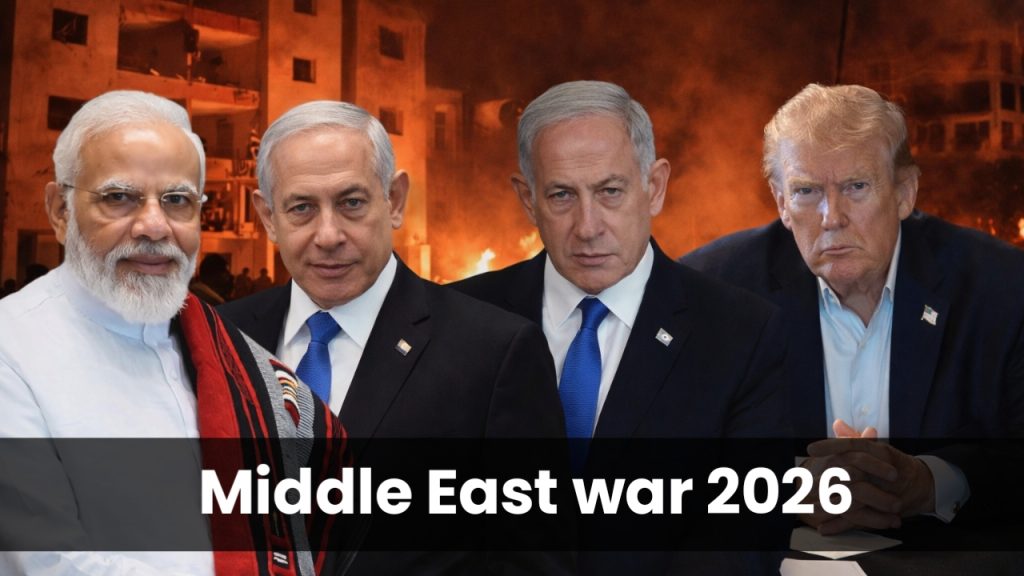
US-Israel : The military confrontation between the United States, Israel and Iran has entered its fourth day, with tensions escalating rapidly across West Asia. The crisis erupted on February 28, 2026, following coordinated US-Israeli airstrikes inside Iran. The strikes reportedly resulted in the death of Iran’s Supreme Leader, Ayatollah Ali Khamenei, dramatically altering the region’s political and security landscape.
Retaliation Expands Across the Gulf
In the aftermath of the strikes, Tehran launched a series of retaliatory attacks. Drones and missiles were reportedly fired toward American military installations and diplomatic facilities in several Gulf nations. The widening scope of the confrontation has raised concerns about a broader regional war.
Israel, meanwhile, intensified its military operations in Lebanon, targeting positions linked to Hezbollah. The cross-border hostilities have further complicated an already volatile situation.
According to emerging reports, the death toll inside Iran has climbed past 742, reflecting the heavy cost of the escalating conflict. Beyond the battlefield, global markets have also reacted sharply, with crude oil prices surging beyond $150 per barrel amid fears of supply disruptions.
Read Also –
Report: Trump Weighs Support for Anti-Government Groups in Iran
A report published by The Wall Street Journal claims that former US President Donald Trump is considering backing Iranian factions willing to take up arms against Tehran’s leadership. The report suggests that these groups could function as ground forces with potential support from Washington.
US officials familiar with the matter described the idea as one under discussion, though no formal announcement has been made by the White House. The proposal, if pursued, could mark a significant shift in American strategy toward Iran.
Iran’s New Defense Minister Dies Days After Appointment
In another dramatic development, Iran’s newly appointed Defense Minister, Majid Ibn al Reza, died just two days after assuming office. Details surrounding his death remain unclear, adding further uncertainty to the situation within the Iranian leadership.
Read Also –
PM Modi Engages Regional Leaders
Amid rising instability in West Asia, Indian Prime Minister Narendra Modi has stepped up diplomatic outreach. Over the past 48 hours, he has held conversations with leaders from eight countries in the region.
These include the United Arab Emirates, Israel, Saudi Arabia, Jordan, Bahrain, Oman, Kuwait and Qatar. The discussions are understood to have focused on regional stability, the safety of citizens and the broader implications of the conflict.
Global Attention on a Fragile Region
As military actions continue and diplomatic channels remain active, the Middle East stands at a critical juncture. With rising casualties, volatile energy markets and shifting political calculations, the coming days are expected to play a decisive role in shaping the trajectory of the crisis.
Related News



Follow us for Latest Updates

2 Thoughts on “Middle East Conflict Deepens on Day Five After US-Israel Strikes on Iran”