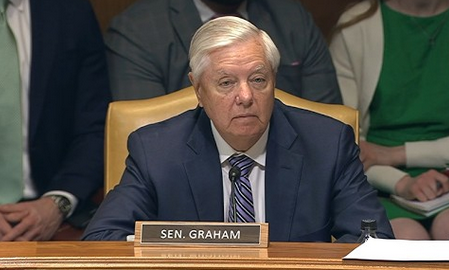
In a significant diplomatic shift, U.S. Senator Lindsey Graham, a high-ranking Republican and close ally of President Donald Trump, has publicly questioned Pakistan’s reliability as a mediator between the United States and Iran. Speaking before the Senate Appropriations Committee, Graham suggested that the U.S. should seek alternative diplomatic channels to reach a truce with Tehran.
Allegations of Military Cooperation
The Senator’s sharp critique follows intelligence reports suggesting that Pakistan may have permitted Iranian military aircraft to utilize its airfields—specifically the Nur Khan Airbase—to shield them from potential U.S. strikes.
During a high-stakes testimony involving Secretary of War Pete Hegseth, Graham raised several key concerns:
- Neutrality at Stake: Graham argued that providing a “safe haven” for Iranian military assets is incompatible with the role of a fair and unbiased mediator.
- Stance on Israel: The Senator cited previous hostile statements from Pakistani defense officials regarding Israel as a reason for his skepticism toward Islamabad’s alignment with U.S. interests.
Pakistan’s Official Rebuttal
The Pakistani Foreign Office has moved quickly to dismiss these claims, labeling them as “sensationalized and misleading.” Islamabad clarified that:
- The arrival of Iranian aircraft was strictly linked to the initial phase of ceasefire discussions.
- There is no clandestine military arrangement or “preservation” agreement between the two nations.
- Such narratives are viewed by Islamabad as attempts to sabotage regional peace efforts.
The Trump Administration’s Strategy
Despite the friction in the Senate, President Trump has signaled a patient approach. During a recent interview, the President emphasized that there is “no rush” to finalize a deal as long as the current economic blockade remains effective. Trump reiterated his absolute commitment to ensuring Iran never acquires a nuclear weapon, stating he is “100% certain” of a successful outcome.
Expert Analysis: A Crossroads for Diplomacy
Senator Graham’s comments represent a growing frustration within sections of the U.S. government regarding multifaceted foreign policies. If Washington decides to pivot away from Pakistan, it may look toward other regional players like Oman or Qatar to facilitate future negotiations. This development places significant pressure on Islamabad to prove its transparency as it navigates the complex landscape of U.S.-Iran relations.
Disclaimer: This report is based on official testimonies, government briefings, and international media coverage. The views expressed are those of the respective government officials and do not necessarily reflect the final policy decisions of the United States.
Follow us on Google News for more updates: